Fifteenth Sunday after Pentecost
Friends in Christ,
Welcome to our weekly Sunday update. This Sunday is the Fifteenth Sunday after Pentecost. The Gospel reading for this Sunday tells how Jesus recalled from death the son of the widow of Naim. As Our Lord approached the city, accompanied by “his disciples, and a great multitude . . . a dead man was carried out, the only son of his mother; and she was a widow: and a great multitude was with her” (Luke 7:11-12). The Gospel makes it clear that what Jesus did was done in the presence of a multitude of witnesses: those following Our Lord and those accompanying the grieving mother. He revealed Himself as the Lord of life before both His followers and the people of Naim. “And there came a fear on them all: and they glorified God, saying: A great prophet is risen up among us: and, God hath visited his people” (Luke 7:16). Those present did not keep what they had seen secret but spread the word “throughout all Judea, and throughout all the country round about” (Luke 7:17). And, in time, throughout all the world, because what eyewitnesses had seen was recorded in the Gospel of Saint Luke.
Note: This Tuesday (September 8, 2026) is the Nativity of the Blessed Virgin Mary and is the 461st anniversary of the establishment of Catholicism in today's United States. Please see our historical piece at the conclusion of this update.
Calendar of Special Observances
Celebrations are those listed in the Roman Missal of 1962.
DAY, DATE – FEAST (CLASS)
Sunday, September 6 – Fifteenth Sunday after Pentecost (II)
Monday, September 7 – Feria (IV)
Tuesday, September 8 – The Nativity of the Blessed Virgin Mary (II)
Wednesday, September 9 – (USA) St. Peter Claver, Confessor (III) – St. Gorgonius, Martyr (IV – Feria (IV)
Thursday, September 10 – St. Nicholas of Tolentino (III)
Friday, September 11 – Feria (IV) – Commemoration of Ss. Protus and Hyacinth, Martyrs
Saturday, September 12 – The Most Holy Name of Mary (III)
Fifteenth Sunday after Pentecost
The links provided below can be used to download printable copies of the Proper Prayers for the Fifteenth Sunday after Pentecost with English or Spanish translation, followed by commentary by Dr. Michael P. Foley.
Traditional Latin Mass Schedule
Diocese of Charlotte Sunday Masses
Chapel of the Little Flower (757 Oakridge Farm Road, Mooresville, NC)
- 10:00 a.m. (Low)
- 12:00 p.m. (Sung)
- Chaplain: Fr. Brandon Jones
- Chapel related questions? Email Father at: tlmchapel(at)rcdoc.org
- DONATE: To donate to the Chapel of the Little Flower click here (via Saint Ann Parish, Charlotte)
- More details: https://carolinaliturgy.org/chapel
Note: Only Sunday Latin Masses and Holy Days are offered at the Chapel. This is the only Diocese of Charlotte location which offers the Traditional Latin Mass.
Saint Thérèse of the Child Jesus and the Holy Face, the Little Flower, pray for us!
Diocese of Raleigh Sunday Masses
- 1:00 p.m., Sacred Heart (Dunn, NC)
- 4:30 p.m., - First Sunday, Holy Name Cathedral (Raleigh, NC)
- 5:00 p.m., - Fourth Sunday, Basilica of Saint Mary (Wilmington, NC)
- For additional locations and Masses please see our Mass Times webpage
Diocese of Charleston Sunday Masses
- 12:00 p.m., Prince of Peace (Taylors SC)
- 1:00 p.m., Our Lady of the Lake (Chapin SC)
- 12:00 p.m., Sacred Heart (Charleston SC)
- 5:30 p.m., Stella Maris (Sullivans Island, SC)
Diocese of Charleston Daily Traditional Latin Masses
- Prince of Peace (Taylors SC) – See bulletin for daily Mass schedule.
- For additional locations and Masses please see our Mass Times webpage
As a reminder, travelers are urged to consult parish websites or offices for up-to-date information regarding possible changes in the schedule of Mass times.
Chapel of the Little Flower Announcements
Mass Intentions for Sunday
Sunday September 6, 10:00 a.m. – +Repose of the soul of Sharon Bizub by the family
Fall/Winter Mass Intentions
The Mass Book will be open for October, November, December, and January Mass intentions on Sunday September 20th between the 10:00 and 12:00 Masses. Mass stipends, either cash or check, will be collected that day for the Mass intentions.
If one is available to help on the 20th with the collection of the Mass intentions, please sign up on the signup sheet on the table in the narthex.
Support Sacred Music at the Chapel by Joining the Schola and Choir
The Church teaches us that singing is praying twice. Please consider lending your musical talents to the beautifying of the sacred liturgy here at the Chapel of the Little Flower. If one would like more information about joining the schola and choir, please contact the Chapel music director whose contact information is at the bottom of the hymn sheets found on the table in the narthex. Thank you for your generosity.
Saint Ann Parishioner Catholic School Check In
If one is a parishioner at St. Ann parish and has children enrolled in the Catholic schools, please scan the QR code found on the table in the narthex of the Chapel. This is the new attendance check in system.
Donations for the Chapel of the Little Flower
To donate to the Chapel of the Little Flower, please make out a check to “St. Ann Catholic Church” and carefully earmark it for “Latin Mass” or “Chapel of the Little Flower”. It can be mailed to the parish (3635 Park Road, Charlotte, NC 28209). To donate online, please visit the parish’s “Chapel of the Little Flower” online donation portal at this link.
Lost and Found
If one is missing a missal, book, or other item, please see the Lost and Found table in the cry room.
Father Jones’ Contact Info
If one has questions about the Chapel of the Little Flower, that are not related to one’s parish, please email Father Jones directly at: tlmchapel(at)rcdoc.org
Visiting the Chapel of the Little Flower
If you haven’t attended Mass at the Chapel of the Little Flower yet, you are welcome to join us. Seating is adequate at both Masses, and there is plenty of parking; a cry room; open space outside for the kids after Mass. Bulletins from Saint Ann and Saint Thomas Aquinas parishes are usually available.
General Announcements
First Sunday Food & Fellowship Potluck at Saint Thomas Aquinas – Sunday September 6 will be the monthly Sunday Food and Fellowship at Saint Thomas Aquinas from 1:30 p.m. – 3:00 p.m. If you attend Mass at the Chapel, you can always drop by after Mass. Please consider bringing something to share.
SAVE THE DATE Saturday October 3: Saint Ann Carnival – The Saint Ann 2026 Carnival will be held on October 3rd from 10:00 a.m. - 7:00 p.m. featuring family fun for everyone with rides and games, food and drink, bingo, bake sale, church tours, and a brand-new toddler fun zone. More information can be found in the St. Ann's bulletin, website, and social media pages. The parish hopes to see you there! Learn more at this link.
Eucharistic Congress - Friday September 11 and Saturday September 12 – Next weekend is the diocese’s annual Eucharistic Congress in Uptown Charlotte with a Eucharistic procession, speakers, confessions, and a Holy Hour with Fr. Kevin Martinez as homilist. To learn more about this free event, click here.
Relic of True Cross at Saint Ann - Monday September 14 – On the Feast of the Holy Cross, Monday September 14, St. Ann parish will expose a relic of the True Cross in the church from 7:30 a.m. – 7:00 p.m. Please come and venerate the instrument of our salvation. And please treat the relic as one would the Eucharist by genuflecting before it.
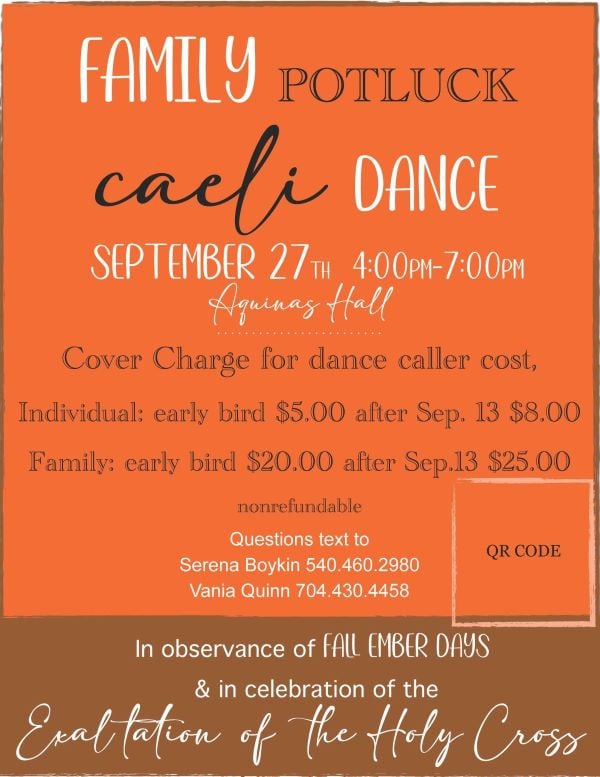
Fall Family Potluck and Caeli Dance – Please join Saint Thomas Aquinas parish on Sunday September 27th from 4:00-7:00 p.m. for its Fall Family Potluck and Caeli dance in observance of the Fall Ember days and in celebration of the Exaltation of the Holy Cross earlier in the month. To learn the costs and to sign up to bring a dish or dessert to share, please click on this link.
Support Saint Ann and Saint Thomas Parishes – Our parishes remain the anchor of our spiritual and community lives and continue to promote the sacred traditions, devotions, speakers and catechesis important for the spiritual growth of ourselves and our families. They also need our continued financial support (and occasional visits!). Both parishes would appreciate our continued generosity.
Bishop Martin issues Pastoral Letter to the Faithful Associated with the Society of Saint Pius X
LiveMass.net – Want to watch a Latin Mass online? The Priestly Fraternity of Saint Peter (FSSP) has a broadcast apostolate which streams its Latin Masses across the world at various times of the day. To view visit: https://www.livemass.net/
Rosary for the Traditional Latin Mass – A Rosary is offered for the restoration of the Traditional Latin Mass in the church on Sundays after the 11:30 a.m. Novus Ordo Mass at Saint Thomas Aquinas Church.
Daily Holy Face Chaplet for Sacred Liturgy (perpetual novena) – For the preservation of the Traditional Latin Mass, it has been recommended to all friends of the sacred liturgy in the diocese to consider continually praying the powerful Holy Face chaplet, under the banner of Our Lady of the Holy Name. To pray the chaplet, please see this link.
Cardinal Burke’s Prayer for Pope Leo XIV – His Eminence Cardinal Raymond Burke has released a prayer for Pope Leo XIV. Please see the prayer at the links below and consider praying this daily for the Holy Father as he leads the Church. PDF copies can be accessed at these links: [English] [Español] [Latin]
Holy Face Devotions
Prayers of Reparation to the Holy Face of Jesus are offered each week at the following churches on the indicated days:
- St. James (Concord) – Monday, 10-10:30 a.m. (in the cry room)
- St. Mark – Tuesday, 5:30 p.m.
- St. Thomas Aquinas – Tuesday, 6:00 a.m.
- St. Ann – Tuesday, 7:30 a.m. (following 7:00 a.m. Mass)
- St. Michael the Archangel (Gastonia) – Tuesday, 8:30 a.m. (following 8:00 a.m. Mass)
- St. Vincent de Paul – Tuesday, 8:40 a.m.
- Holy Spirit (Denver) – Tuesday, 10-11:00 a.m. (following the 9:15 a.m. Mass)
- Saint Elizabeth of the Hill Country (Boone) – Third Tuesday, at 6:45 p.m. after Mass in the Youth Room
- St. John the Baptist (Tryon) - First Saturday, 9:30 a.m. (after 8:30 a.m Mass)
Note: Days and times may be subject to change due to holidays.
“Jesus, Your ineffable image is the star which guides my steps. Ah, You know, Your sweet Face is for me Heaven on earth” (from Canticle to the Holy Face by Saint Thérèse de Lisieux, the 19th century Discalced Carmelite nun who took the name in religion, Thérèse of the Child Jesus and the Holy Face).
Traditional Latin Mass and Liturgical News
- The Feast of Pope St Pius X by Greg DiPippo, New Liturgical Movement (September 3, 2026). [Feast of Pope St Pius X]
- Young Vietnamese Catholics are rediscovering the Latin Mass by Alex Hoang, Union of Catholic Asian News (August 25, 2026). [Rediscovering the Latin Mass]
- St. Gregory the Great and Gregorian Chant, Clear Creek Abbey (September 2, 2026). [Gregorian Chant]
- The Numinous in the Roman Rite, Part II by Dr. Michael P. Foley, New Liturgical Movement (August 28, 2026). [Numinous in the Roman Rite, Part II]
- A Few Notes on Readings from Job by Greg DiPippo, New Liturgical Movement (August 31, 2026). [Readings from Job]
- When Tradition Inspires Fiction by Fr. Armand de Malleray, FSSP, Crisis Magazine (September 1, 2026). [When Tradition Inspires Fiction]
- Spanish Regional Government Spotlights Sainthood Cause of Queen Isabella by Walter Sánchez Silva, EWTN News (August 31, 2026). [Sainthood Cause of Queen Isabella]
- The "Auriesville Pilgrimage" for Restoration by John Paul Sonnen, Liturgical Arts Journal (August 27, 2026). [Auriesville Pilgrimage]
- Saint “Added-On” by Greg DiPippo, New Liturgical Movement (August 30, 2026). [Saint “Added-On”]
- Bishop Menjivar Appoints Priests to Assist Latin Mass Expansion in West Virginia by Tyler Arnold, EWTN News (September 1, 2026). [Latin Mass Expansion]
- The Legend of St Giles by Greg DiPippo, New Liturgical Movement (September 1, 2026). [Legend of St Giles]
- From Ecuador: Fr. Heenan Reports on the New FSSP Apostolate’s First Days of Ministry, FSSP Mission Tradition Newsletter (August 26, 2026). [New FSSP Apostolate’s First Days]
- Faithful invited to witness historic beatification of Georgia Martyrs, Catholic News Herald (July 31, 2026). [Georgia Martyrs]
Saints and Special Observances
The Nativity of the Blessed Virgin Mary has been celebrated by Christians for fifteen centuries or more as an event of world-historical and, indeed, cosmic proportions. The birth of Mary Immaculate made possible the birth of the One who was to come, the Savior of the world, Son of God Himself, Our Lord Jesus Christ. While there is nothing to be found in the canonical gospels regarding the birth of Our Lady, Tradition holds that she was the daughter of Joachim and his wife, Anne. Their story is told in the Protoevangelium of James, an apocryphal text which has existed as we know it today since the second century of the Christian era.
Like other notable couples in the history of the people of God (Abram and Sarai, Elcanna and Anna, Zachary and Elizabeth) Joachim and Anne were facing the onset of old age in a state of childlessness. Fearing that they had fallen out of favor with God, they devoted themselves to prayer and fasting until, at last, an angel appeared to Anne and told her, “The Lord has heard your prayer, and you shall conceive, and shall bring forth, and your seed shall be spoken of in all the world.”
Later, according to the same text, “Joachim brought the child to the priests, and they blessed her, saying: ‘O God of our fathers, bless this child, and give her an everlasting name to be named in all generations.’” Mary would later exclaim, in her encounter with Elizabeth described in the first chapter of the Gospel According to Saint Luke, “My soul doth magnify the Lord. And my spirit hath rejoiced in God my Saviour. Because he hath regarded the humility of his handmaid; for behold from henceforth all generations shall call me blessed” (Luke 1:46-48). Mary’s parents decided, along with the priests of the Temple, that the child should be given to God as a consecrated virgin. Her eventual marriage to Joseph was understood from the start to be a chaste union that would produce no children – and yet, at the start, there was already a Child.
The Protoevangelium of James is not a canonical gospel; that is to say, it is not unequivocally held by the Church to be the result of divine inspiration. Nevertheless, over the past eighteen hundred years, it has provided essential background for the life of a central figure in the history of the Church: Mary, the Mother of God. The Church has been celebrating her birth since at least the sixth century, as evidenced by the inclusion in a compilation of that period a hymn to be sung at Marymas. The earliest documentation of a liturgical commemoration has to do with the sixth century dedication of the Basilica Sanctae Mariae ubi nata est (“Basilica of Saint Mary* where she was born”). Originally built in the fifth century, the basilica was located on the site in Jerusalem where the home of Joachim and Anne was believed to have stood.
The Feast of the Birth of the Blessed Virgin Mary was widely celebrated in Eastern churches in the seventh century, and September 8th came to be accepted by consensus as the appropriate date for the commemoration of the Virgin’s birth. When the dogma of the Immaculate Conception was finally pronounced by Pope Pius IX in 1854, he established December 8th as the date on which Joachim and Anne conceived their daughter because it preceded the long-accepted date of her birth by exactly nine months.
*Today the basilica is called Church of Saint Anne
Closing Commentary
We offer, in closing, an excerpt from the commentary of Dom Prosper Guéranger, OSB, on “September 8 – The Nativity of the Blessed Virgin Mary,” followed by a link to the full text of the commentary from The Liturgical Year.
September 8 – The Nativity of the Blessed Virgin Mary
Let us celebrate the Nativity of the Virgin Mary; let us adore her Son, Christ our Lord. Such is the invitation addressed to us today by the Church. Let us hearken to her call; let us enter into her overflowing joy. The Bridegroom is at hand, for his throne is now set up on earth; yet a little while, and he will appear in the diadem of our human nature, wherewith his Mother is to crown him on the day of the joy of his heart, and of ours. Today, as on the glorious Assumption, the sacred Canticle is heard; but this time it belongs more to earth than to heaven.
Truly a better Paradise than the first is given us at this hour. Eden, fear no more that man will endeavor to enter thee; thy Cherubim may leave the gates and return to heaven. What are thy beautiful fruits to us, since we cannot touch them without dying? Death is now for those who will not eat of the fruit so soon to appear amid the flowers of the virgin earth to which our God has led us.
Hail, new world, far surpassing in magnificence the first creation! Hail blessed haven, where we find a calm after so many storms! Aurora dawns; the rainbow glitters in the heavens; the dove comes forth; the ark rests upon the earth, offering new destinies to the world. The haven, the aurora, the rainbow, the dove, the ark of salvation, the Paradise of the heavenly Adam, the creation whereof the former was but a shadow: all this art thou, sweet infant, in whom already dwell all grace, all truth, all life.
Thou art the little cloud, which the father of prophets in the suppliant anguish of his soul awaited; and thou bringest refreshment to the parched earth. Under the weakness of thy fragile form, appears the Mother of fair love and of holy hope. Thou art that other light cloud of exquisite fragrance, which our desert sends up to heaven. In the incomparable humility of thy soul, which knows not itself, the Angels, standing like armed warriors around thy cradle, recognize their Queen.
O Tower of the true David; citadel withstanding the first shock of Satan’s attack, and breaking all his power; true Sion, founded on the holy mountains, the highest summits of virtue; temple and palace, feebly foreshadowed by those of Solomon; house built by Eternal Wisdom for herself: the faultless lines of thy fair architecture were planned from all eternity. Together with Emmanuel, who predestined thee for his home of delights, thou art thyself, O blessed child, the crowning point of creation, the divine ideal fully realized on earth.
Let us, then, understand the Church when, even on this day, she proclaims thy divine maternity, and unites in her chants of praise the birth of Emmanuel and thine own. He who, being Son of God by essence, willed to be also Son of man, had, before all other designs, decreed that he would have a Mother. Such, consequently, was the primordial, absolute character of that title of mother, that in the eternal decree, it was one with the very being of the chosen creature, the motive and cause of her existence, as well as the source of all her perfections natural and supernatural. We too, then, must recognize thee as Mother, even from thy very cradle, and must celebrate thy birthday by adoring thy Son our Lord.
Inasmuch as it embraces all the brethren of the Man-God, thy blessed maternity sheds its rays upon all time, both before and after this happy day. God is our king before ages: he hath wrought salvation in the midst of the earth. “The midst of the earth,” says the Abbot of Clairvaux, “admirably represents Mary. Mary is the center of the universe, the ark of God, the cause of creation, the business of ages. Towards her turn the inhabitants of heaven and the dwellers in the place of expiation, the men that have gone before us, and we that are now living, those who are to follow us, our children’s children and their descendants. Those in heaven look to her to have their ranks filled up; those in purgatory look for their deliverance; the men of the first ages, that they may be found faithful prophets; those that come after, that they may obtain eternal happiness. Mother of God, Queen of heaven, Sovereign of the world, all generations shall call thee blessed, for thou hast brought forth life and glory for all. In thee the Angels ever find their joy, the just find grace, sinners pardon; in thee, and by thee, and from thee, the merciful hand of the Almighty has reformed the first creation.”
[September 8 The Nativity of the Blessed Virgin Mary]
September 8, 1565: The Founding of America's First Parish, Saint Augustine (Florida)
Tuesday September 8 is not only the Feast of the Nativity of the Blessed Virgin Mary, it is the nativity of Catholicism in the United States as the first parish of this country was established 461 years ago in Saint Augustine, Florida.
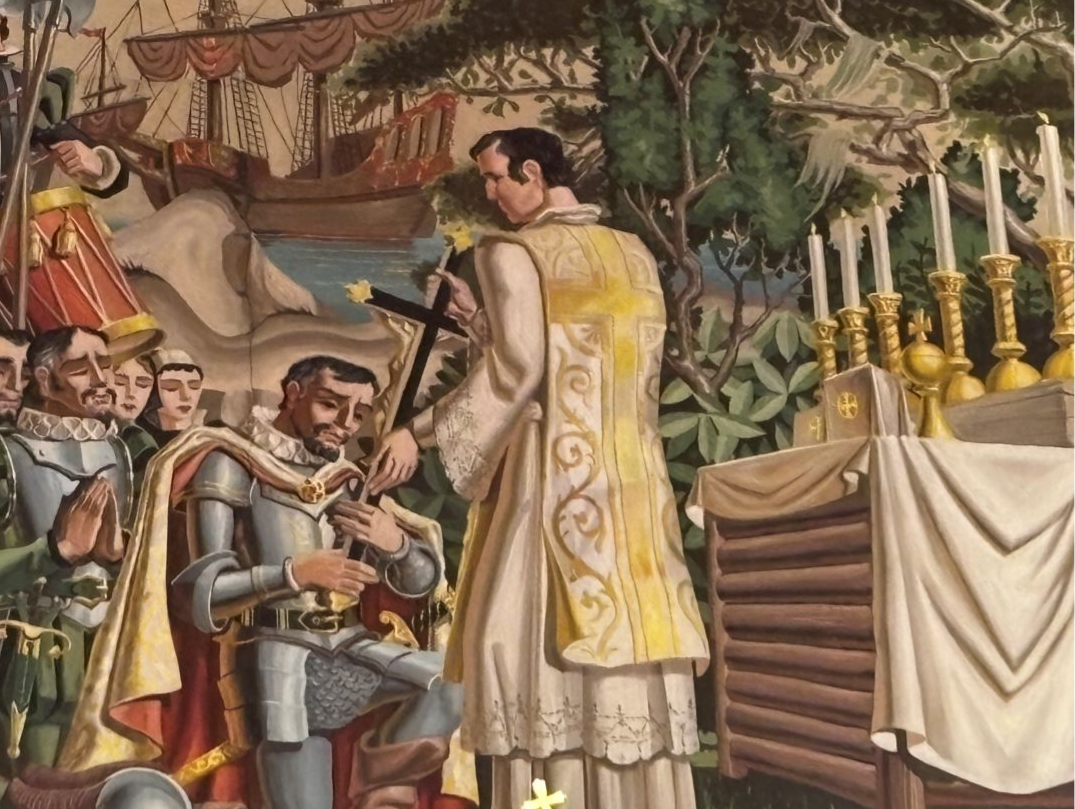
On this date, Pedro Menédez de Avilés, Captain-General of the Spanish Indies Fleet, after a two-month harrowing voyage from Spain, disembarked from his ship onto this new soil, and giving thanks to God, kissed a cross planted in the ground by his chaplain (America's first "pastor"), Fr. Fransico Lopez de Mendoz Grajales, as the Te Deum was chanted.
Menédez, the newly appointed governor of this first permanent European settlement in today's United States, proclaimed the land “Nombre de Dios”, in the Name of God. Fr. Lopez then offered a Mass in thanksgiving, followed by a feast with the Timucuan natives who were present to see these new arrivals and this “new” religion – hence the first Thanksgiving Day in America’s history.
The settlement and parish were named after Saint Augustine, for it was 12 days earlier, on his feast day August 28, 1565, that Menédez first sighted the land known as La Florida (the name La Florida already being given by Ponce de Leon on Easter Saturday 1513 during his exploration voyage near the same location).
Thus September 8, 1565 began the first permanent European settlement in today's United States of America, the first Thanksgiving, the first parish Mass, and as historian Michael V. Gannon wrote in The Cross in the Sand,
'It was also the beginning of the parish of Saint Augustine and of the permanent service of the Catholic Church in what is now the United States."
Gannon continues, "From that place, for 198 uninterrupted years, priests and laymen would carry Christianity and civilization into the wild interior: first diocesan, then Jesuit, and finally Franciscan missionaries would drop their lamps of faith and knowledge into the darkness as far as Virginia to the north, and Texas in the west, and write their names into one of the least known but most heroic chapters of American and Catholic history."
~
Featured below are photographs of the birthplace of Catholicism in America (preceded by descriptions).
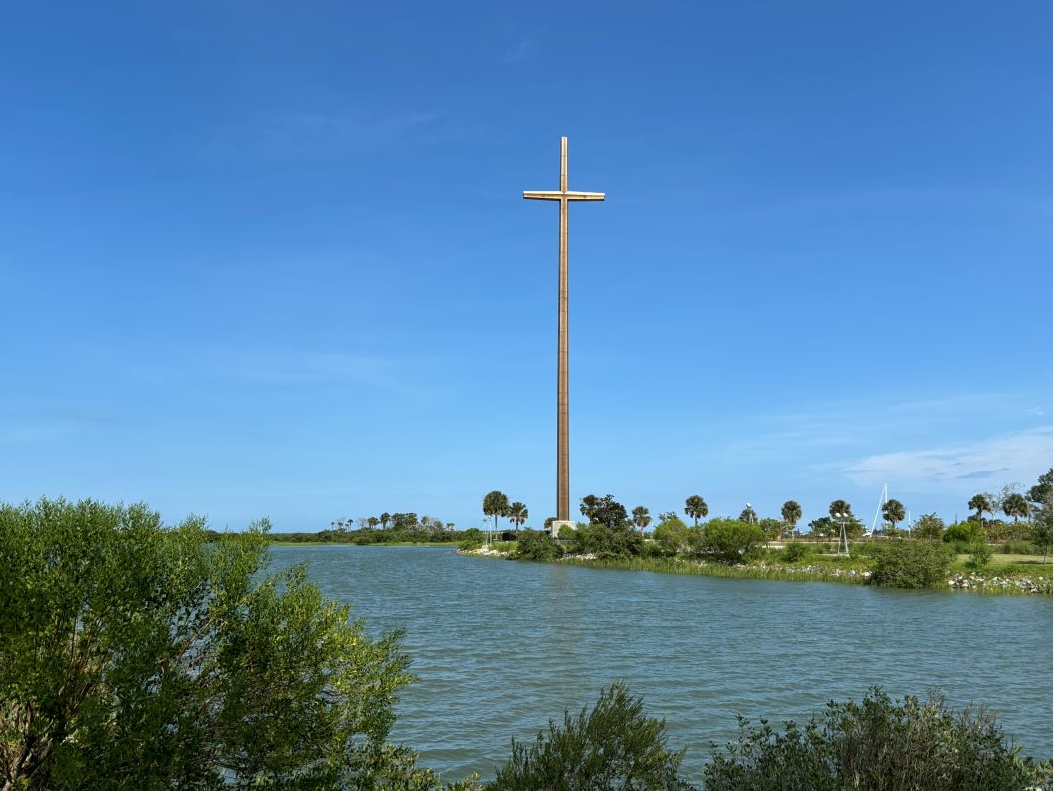
- Site of where Fr. Lopez (America's first pastor) held the cross kissed by Governor Menédez upon landing at Saint Augustine, Florida
- Painting of Governor Menédez and Fr. Lopez in the Saint Augustine Cathedral
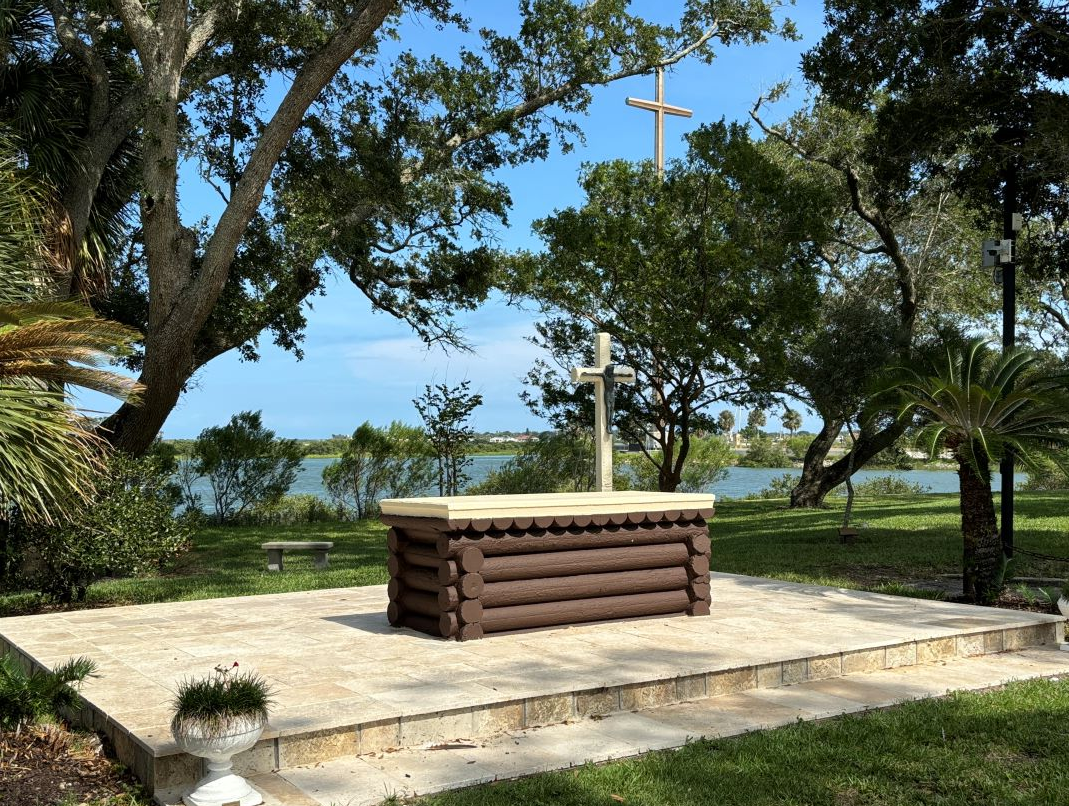
- Rustic altar at the reported site of the first parish Mass on September 8, 1565, offered by Fr. Lopez at Mission Nombre de Dios, Saint Augustine, Florida
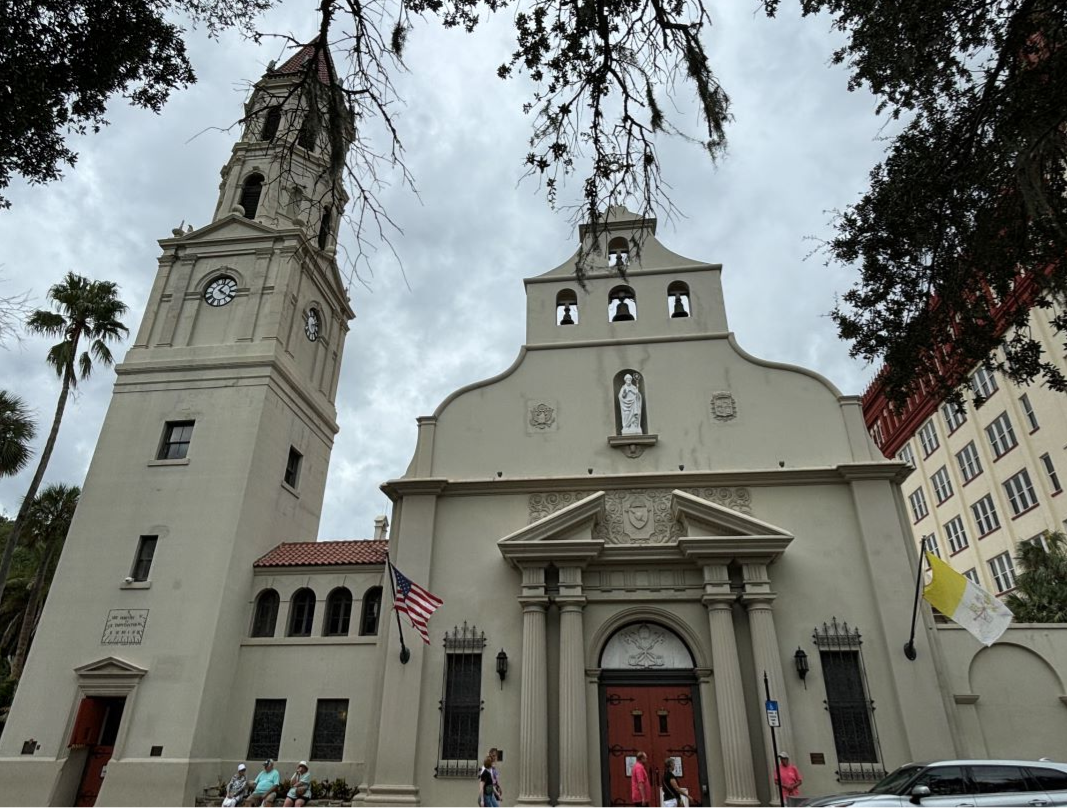
- Current Cathedral of Saint Augustine, Florida (1797)
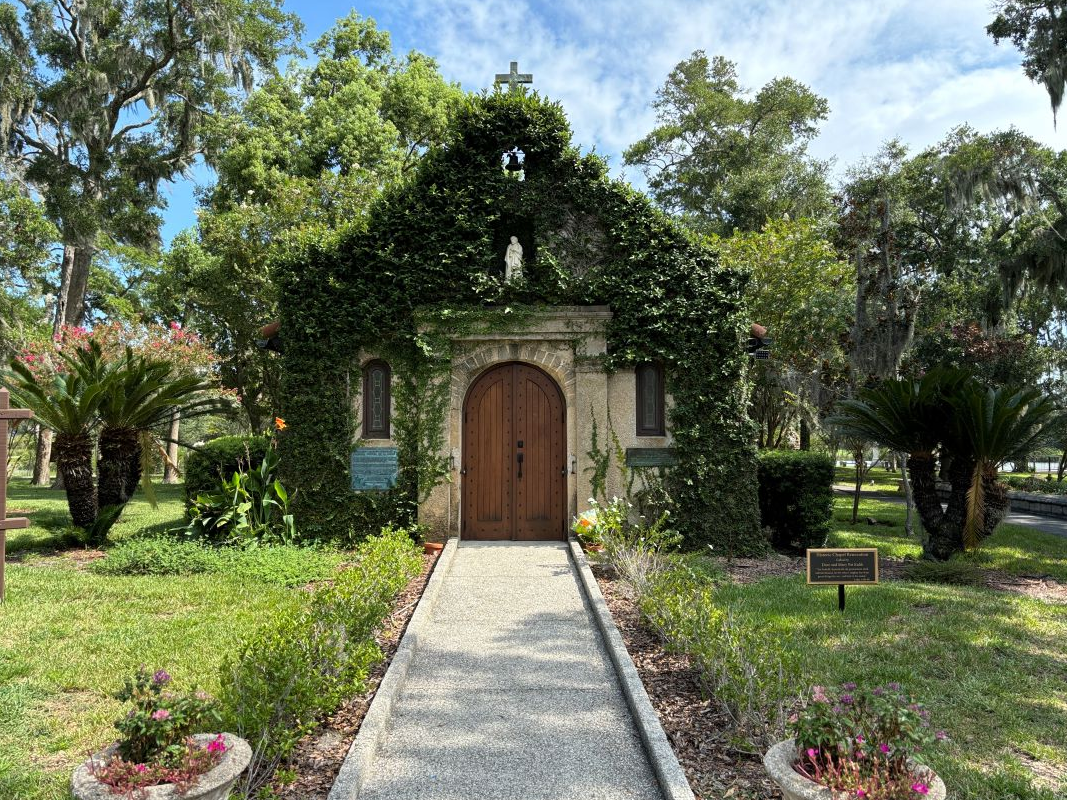
- Current Mission Shrine of Our Lady of La Leche (1915), first established in 1615
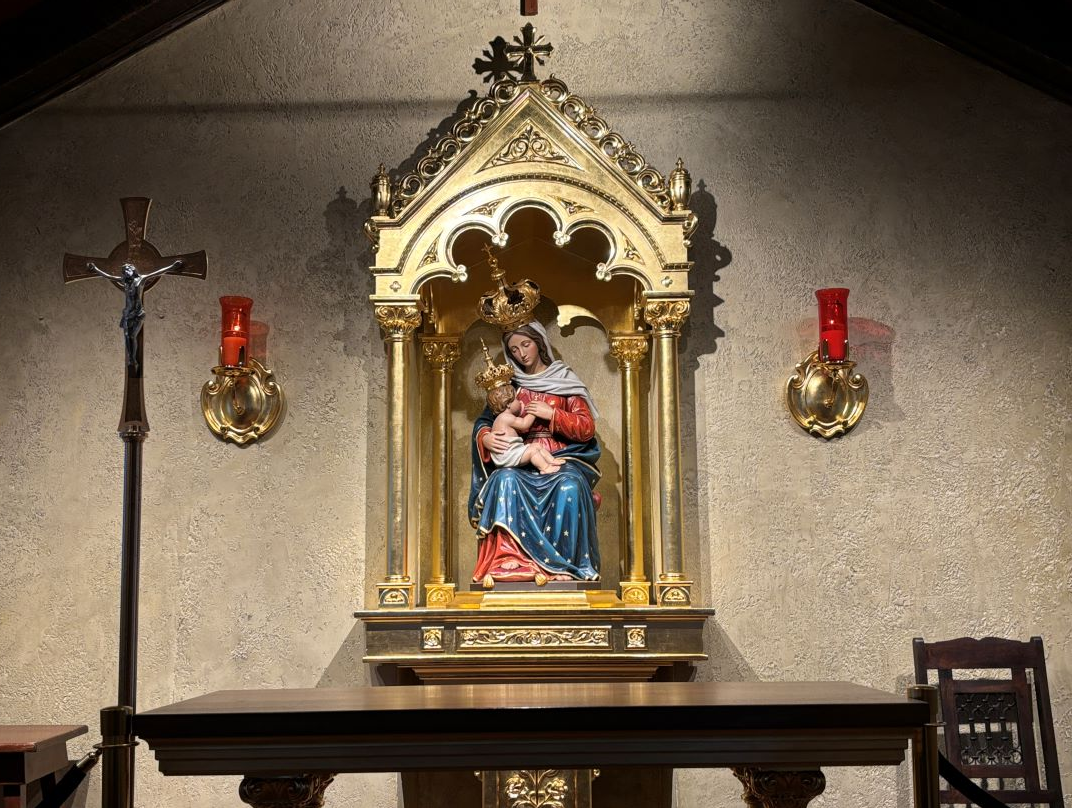
- Statue of Our Lady of La Lache (Our Lady of the Milk), an ancient Marian devotion from Bethlehem that was introduced by the Spanish to Saint Augustine and honored also by the Timucuan native converts
Happy birthday to the Catholic Church in the United States America!
Our Lady of La Leche and Saint Augustine, pray for us!