Eighteenth Sunday after Pentecost
Friends in Christ,
Welcome to our weekly Sunday update. This Sunday is the Eighteenth Sunday after Pentecost. In the Gospel reading for the day (Matthew 9:1-8), we are told that upon His arrival by boat at “His own city” Jesus was met by a group carrying “one sick of the palsy lying in bed.” Seeing the faith of those who brought the man, Our Lord immediately said to the paralytic, “Be of good heart, son, thy sins are forgiven thee.” Some scribes, hearing this, accused Him in their own thoughts of blasphemy; but Jesus, reading their minds, asked them, “Why do you think evil in your hearts?” Was it easier to tell a man his sins were forgiven or to say, “Arise and walk?” Then, having already forgiven the man’s sins, he demonstrated His power to accomplish the other as well, telling the man, “Arise, take up thy bed, and go into thy house.” The man having done so, “[T]he multitude seeing it feared and glorified God who had given such power to men.” Note that the people perceive the power—both to heal and to forgive sins—is given by God not just to a man but to men.
Calendar of Special Observances
Celebrations are those listed in the Roman Missal of 1962.
DAY, DATE – FEAST (CLASS)
Sunday, September 27 – Eighteenth Sunday after Pentecost (II)
Monday, September 28 – St. Wenceslaus, Duke and Martyr (III)
Tuesday, September 29 – The Dedication of St. Michael the Archangel (I)
Wednesday, September 30 – St. Jerome, Priest, Confessor and Doctor (III)
Thursday, October 1 – Jesus Christ the High Priest (III) – St. Remigius, Bishop and Confessor (IV) – Feria (IV)
Friday, October 2 – Holy Guardian Angels (III) – Sacred Heart of Jesus (III)
Saturday, October 3 – St. Therese of the Child Jesus, Virgin (III) – Immaculate Heart of Mary (III)
Eighteenth Sunday after Pentecost
The links provided below can be used to download printable copies of the Proper Prayers for the Eighteenth Sunday after Pentecost with English or Spanish translation, followed by commentary by Dr. Michael P. Foley.
Traditional Latin Mass Schedule
Diocese of Charlotte Sunday Masses
Chapel of the Little Flower (757 Oakridge Farm Road, Mooresville, NC)
- 10:00 a.m. (Low)
- 12:00 p.m. (Sung)
- Chaplain: Fr. Brandon Jones
- Chapel related questions? Email Father at: tlmchapel(at)rcdoc.org
- DONATE: To donate to the Chapel of the Little Flower click here (via Saint Ann Parish, Charlotte)
- More details: https://carolinaliturgy.org/chapel
Note: Only Sunday Latin Masses and Holy Days are offered at the Chapel. This is the only Diocese of Charlotte location which offers the Traditional Latin Mass.
Saint Thérèse of the Child Jesus and the Holy Face, the Little Flower, pray for us!
Diocese of Raleigh Sunday Masses
- 1:00 p.m., Sacred Heart (Dunn, NC)
- 4:30 p.m., - First Sunday, Holy Name Cathedral (Raleigh, NC)
- 5:00 p.m., - Fourth Sunday, Basilica of Saint Mary (Wilmington, NC)
- For additional locations and Masses please see our Mass Times webpage
Diocese of Charleston Sunday Masses
- 12:00 p.m., Prince of Peace (Taylors SC)
- 1:00 p.m., Our Lady of the Lake (Chapin SC)
- 12:00 p.m., Sacred Heart (Charleston SC)
- 5:30 p.m., Stella Maris (Sullivans Island, SC)
Diocese of Charleston Daily Traditional Latin Masses
- Prince of Peace (Taylors SC) – Monday - Friday, 12 noon
- Prince of Peace (Taylors SC) – Saturday, 8:00 a.m.
- For additional locations and Masses please see our Mass Times webpage
As a reminder, travelers are urged to consult parish websites or offices for up-to-date information regarding possible changes in the schedule of Mass times.
Chapel of the Little Flower Announcements
Mass Intentions for Sunday
Sunday September 20, 10:00 a.m. – Repose of the souls of Rita Sebaste and Beverly Michielson by Jonathan Panzica
Free Copies of Benedictus This Weekend
While quantities last, there are free copies of the October edition of Benedictus available in the narthex of the Chapel of the Little Flower this weekend. If you are new to Latin Mass or just looking to deepen your understanding of the Mass, the lectionary readings or the liturgical calendar, we can hardly recommend enough Benedictus.
Similar to the Magnificat publication, (for the Novus Ordo Mass), Benedictus is subscription-based “missalette” published monthly by Sophia Institute Press, which includes the full daily Traditional Latin Masses readings and Propers for the month - both in English and in Latin. Pick up your free copy this weekend. To learn more about Benedictus, click here.
October 3 - Patronal Feast Day of the Chapel
In the 1962 calendar, Saturday October 3rd is the Feast of Saint Thérèse of the Child Jesus, otherwise known as The Little Flower. It is also the namesake and patronal feast of the Chapel of the Little Flower. Please consider offering prayers for the Traditional Latin Mass and in thanksgiving for Father Jones’ dedication in offering this Mass each Sunday over the past year.
Support Sacred Music at the Chapel by Joining the Schola and Choir
The Church teaches us that singing is praying twice. Please consider lending your musical talents to the beautifying of the sacred liturgy here at the Chapel of the Little Flower. If one would like more information about joining the schola and choir, please contact the Chapel music director whose contact information is at the bottom of the hymn sheets found on the table in the narthex. Thank you for your generosity.
Music Sheets Available in the Narthex
A reminder that music sheets are available in the narthex so that one may join in or follow along with the singing at the sung Mass.
Saint Ann Parishioner Catholic School Check In
If one is a parishioner at St. Ann parish and has children enrolled in the Catholic schools, please scan the QR code found on the table/wall in the narthex of the Chapel. This is the new attendance check in system.
Donations for the Chapel of the Little Flower
To donate to the Chapel of the Little Flower, please make out a check to “St. Ann Catholic Church” and carefully earmark it for “Latin Mass” or “Chapel of the Little Flower”. It can be mailed to the parish (3635 Park Road, Charlotte, NC 28209). To donate online, please visit the parish’s “Chapel of the Little Flower” online donation portal at this link.
Lost and Found
If one is missing a missal, book, or other item, please see the Lost and Found table in the cry room.
Father Jones’ Contact Info
If one has questions about the Chapel of the Little Flower, that are not related to one’s parish, please email Father Jones directly at: tlmchapel(at)rcdoc.org
Join Us at the Chapel of the Little Flower
If you haven’t attended Mass at the Chapel of the Little Flower yet, you are welcome to join us. Seating is adequate at both Masses, and there is plenty of parking; a cry room; open space outside for the kids after Mass. Bulletins from Saint Ann and Saint Thomas Aquinas parishes are usually available.
General Announcements
Saint Ann Carnival Saturday October 3 – Join Saint Ann parish for its 30th Annual Saint Ann Carnival on Saturday October 3rd from 10:00 a.m. – 7:00 p.m. Everyone is welcome to enjoy a fun-filled day with rides and games, delicious food and drinks, and plenty of family-friendly fun. Can’t attend? No worries - you can still join in the excitement by purchasing one’s raffle tickets and bidding on fantastic Silent Auction items. NEW THIS YEAR: The Carnival is excited to welcome a live Bluegrass Band performing at 5:00 PM! Find all the Carnival details here. (Also see flyer below)
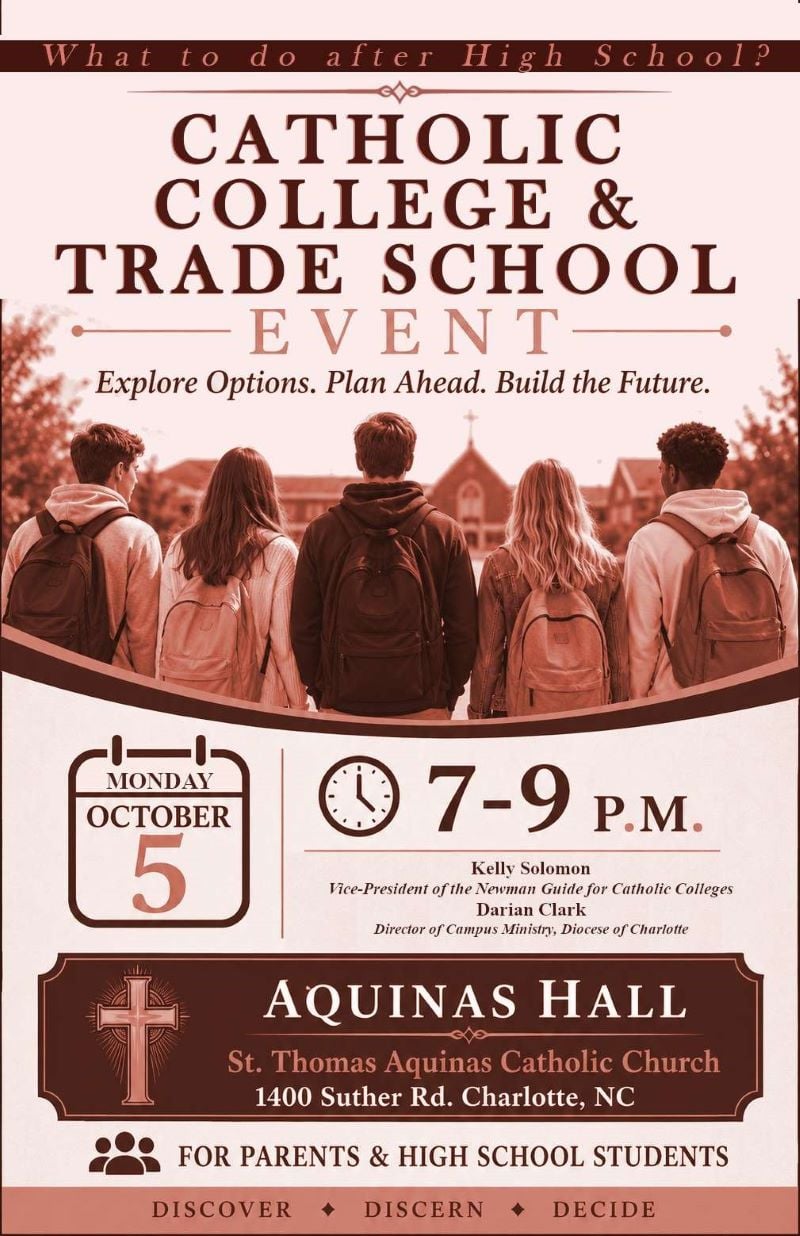
Catholic College and Trade School Event: Monday October 5 – Saint Thomas Aquinas is hosting an event for parents and high school students exploring the Catholic options for both college and trade schools. It will be held from 7:00-9:00 p.m. in Aquinas Hall. To learn more see the flyer at the end of this newsletter.
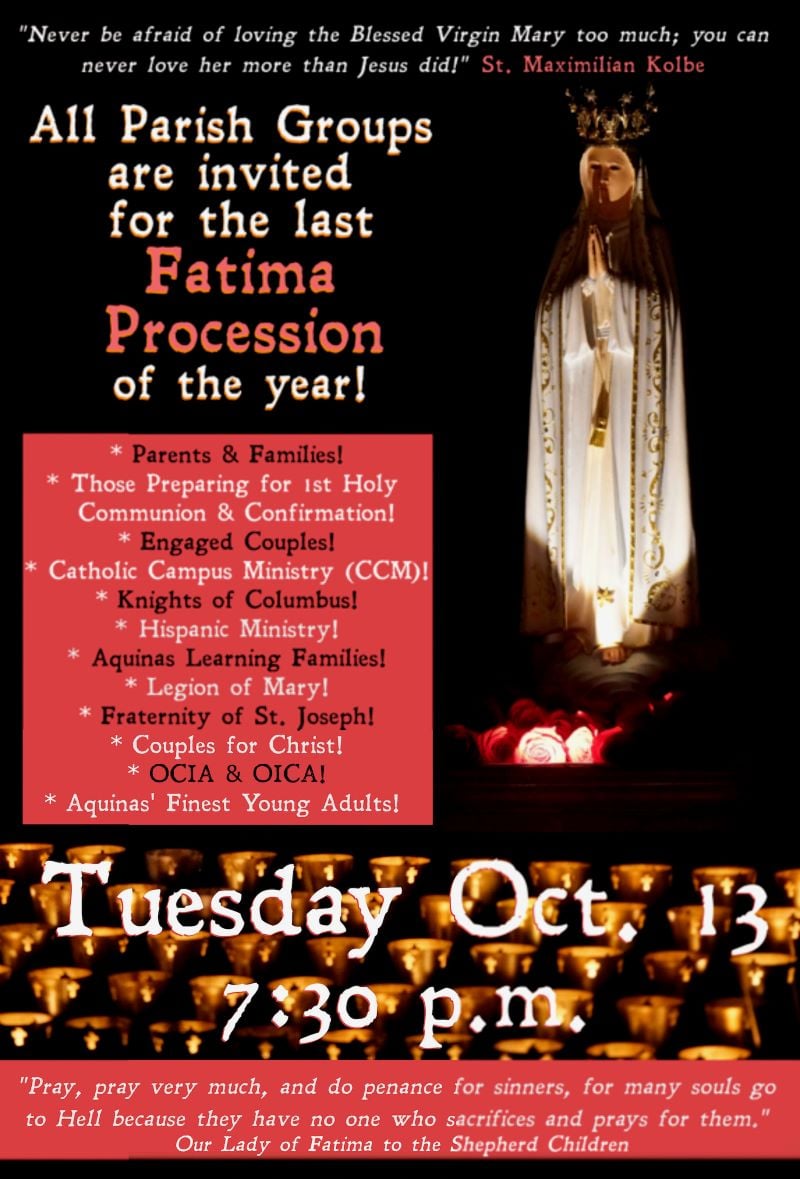
Fatima Procession at Saint Thomas Aquinas Parish Tuesday October 13 – The final Fatima Procession of 2026 will be held on Tuesday October 13 at 7:30 p.m. All the faithful are invited to commemorate the 109th anniversary of the Miracle of the Sun. Please see the flyer at the end of this newsletter.
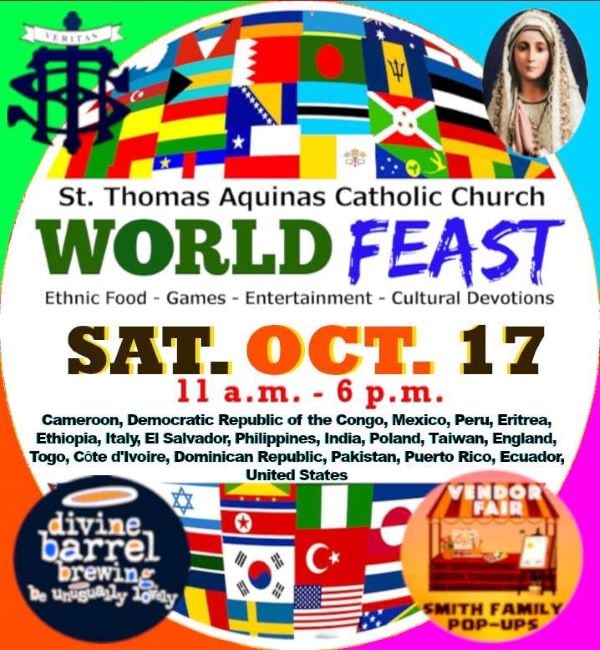
Saint Thomas Aquinas World Feast Day: Saturday October 17 – World Feast Day, Saint Thomas Aquinas’ annual carnival will be held on Saturday October 17 from 11 a.m. - 6:00 p.m. The event features ethnic dishes from over 15 countries, along with games, entertainment and cultural devotions. Please see the flyer at the end of this newsletter.
Support Saint Ann and Saint Thomas Parishes – Our parishes remain the anchor of our spiritual and community lives and continue to promote the sacred traditions, devotions, speakers and catechesis important for the spiritual growth of ourselves and our families. They also need our continued financial support (and occasional visits!). Both parishes would appreciate our continued generosity.
Bishop Martin issues Pastoral Letter to the Faithful Associated with the Society of Saint Pius X
LiveMass.net – Want to watch a Latin Mass online? The Priestly Fraternity of Saint Peter (FSSP) has a broadcast apostolate which streams its Latin Masses across the world at various times of the day. To view visit: https://www.livemass.net/
Rosary for the Traditional Latin Mass – A Rosary is offered for the restoration of the Traditional Latin Mass in the church on Sundays after the 11:30 a.m. Novus Ordo Mass at Saint Thomas Aquinas Church.
Daily Holy Face Chaplet for Sacred Liturgy (perpetual novena) – For the preservation of the Traditional Latin Mass, it has been recommended to all friends of the sacred liturgy in the diocese to consider continually praying the powerful Holy Face chaplet, under the banner of Our Lady of the Holy Name. To pray the chaplet, please see this link.
Cardinal Burke’s Prayer for Pope Leo XIV – His Eminence Cardinal Raymond Burke has released a prayer for Pope Leo XIV. Please see the prayer at the links below and consider praying this daily for the Holy Father as he leads the Church. PDF copies can be accessed at these links: [English] [Español] [Latin]
Holy Face Devotions
Prayers of Reparation to the Holy Face of Jesus are offered each week at the following churches on the indicated days:
- St. James (Concord) – Monday, 10-10:30 a.m. (in the cry room)
- St. Mark – Tuesday, 5:30 p.m.
- St. Thomas Aquinas – Tuesday, 6:00 a.m.
- St. Ann – Tuesday, 7:30 a.m. (following 7:00 a.m. Mass)
- St. Michael the Archangel (Gastonia) – Tuesday, 8:30 a.m. (following 8:00 a.m. Mass)
- St. Vincent de Paul – Tuesday, 8:40 a.m.
- Holy Spirit (Denver) – Tuesday, 10-11:00 a.m. (following the 9:15 a.m. Mass)
- Saint Elizabeth of the Hill Country (Boone) – Third Tuesday, at 6:45 p.m. after Mass in the Youth Room (League of St. Martin chapter)
- St. John the Baptist (Tryon) - First Saturday, 9:30 a.m. (after 8:30 a.m Mass)
Note: Days and times may be subject to change due to holidays.
“Jesus, Your ineffable image is the star which guides my steps. Ah, You know, Your sweet Face is for me Heaven on earth” (from Canticle to the Holy Face by Saint Thérèse de Lisieux, the 19th century Discalced Carmelite nun who took the name in religion, Thérèse of the Child Jesus and the Holy Face).
Traditional Latin Mass and Liturgical News
- Archbishop Fulton J. Sheen declared 'Blessed' at Mass in St. Louis Catholic News Herald (OSV News) (September 24, 2026). [Blessed Fulton J. Sheen]
- Local priests share connections to Archbishop Sheen Catholic News Herald (September 23, 2026). [Local Priests connections to Archbishop Sheen]
- 8 ways Archbishop Sheen impacted our diocese by Lisa Geraci, Catholic News Herald (September 23, 2026). [8 Ways Archbishop Sheen impacted our diocese]
- Michaelmas Day and its Customs by Dr. Michael P. Foley, New Liturgical Movement (September 29, 2021). [Michaelmas Day]
- The Priest’s First Prayer before Holy Communion by Dr. Michael P. Foley, New Liturgical Movement (September 18, 2026). [The Priest’s First Prayer]
- Where is the body of St. Matthew? A visit to his tomb by Jonah McKeown, EWTN News (September 21, 2026). [Where is the body of St. Matthew]
- The Feast of Our Lady of Ransom by Dr. Michael P. Foley, New Liturgical Movement (September 24, 2025). [The Feast of Our Lady of Ransom]
- Scapular of Our Lady of Ransom by Fr. William Rock, FSSP, The Missive (September 1, 2025). [Our Lady of Ransom]
- The Hymn of the Ember Saturday Masses by Greg DiPippo, New Liturgical Movement (September 19, 2026). [Hymn of Ember Saturday Masses]
- September Embertide and the Christianizing of Eden by Fr. William Rock, FSSP, The Missive (September 20, 2021). [September Embertide]
- Faithful invited to witness historic beatification of Georgia Martyrs, Catholic News Herald (July 31, 2026). [Georgia Martyrs]
Saints and Special Observances
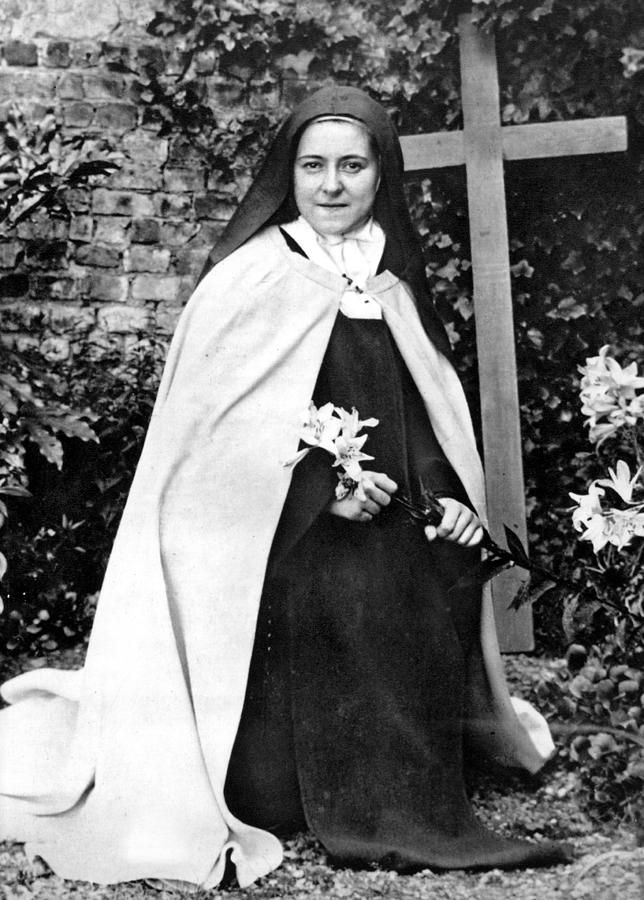
St. Thérèse of the Child Jesus and the Holy Face (The Little Flower), Virgin and Doctor of the Church, was probably the most widely venerated saint of the 20th century. Pope Pius X called her “the greatest saint of modern times.” She is known as St. Thérèse de Lisieux because she lived in the Carmel at Lisieux in Normandy from shortly after her 15th birthday until her death at the age of 24. Near the beginning of her autobiography, she called herself la petite fleur cueillie par Jésus (“the little flower picked by Jesus”); her frequent resort to this metaphor in speaking of herself is the reason she became known as “the Little Flower” throughout the world. Almost unknown to the world at the time of her death in 1897, her fame and popularity increased with astonishing rapidity following publication of her autobiography the ensuing year. Entitled simply Histoire d’une âme (Story of a Soul), the book recounts her spiritual journey from the innocence of childhood in a profoundly devout Catholic family to the difficulties she encountered as a cloistered Carmelite nun facing the approach of death.
Unlike her namesake, St. Teresa of Avila, the sixteenth century foundress of the Discalced Carmelite movement, Thérèse did not compose numerous works of deep theological significance that would stand as classics of Catholic literature for centuries. But her one book, the simple and straightforward story of her own soul, spoke to the spiritual hunger of people at the turn of the twentieth century with the unadorned eloquence of one whose love of Our Lord knew no limits. Her idea of achieving sanctity and getting to Heaven by means of a “little way” struck a responsive chord in the hearts and minds of her readers, and the Little Flower came to be known and loved by millions who found hope and new meaning in their own lives in the concept of the Little Way.
Pope Pius X opened the process which would lead to her canonization by a decree dated June 10, 1914. As she had been dead less than 17 years, the requirement for a 50-year interval between death and beatification had to be waived. She was beatified on April 29, 1923, and canonized by Pope Pius XI on May 17, 1925, less than 28 years after her death. She was canonized exactly five years and one day after her heroine, Jeanne d’Arc, was named a saint; and the two have since been venerated as co-patronesses of the French nation. A century after the death of St. Thérèse, Pope John Paul II completed the honors by naming her a Doctor of the Church in his apostolic letter, Divini Amoris Scientia (The Science of Divine Love) issued on October 19, 1997.
We have scarcely touched on the actual facts of the brief, but eventful, life lived by St. Thérèse de Lisieux; but these may be found in her autobiography and other readily available sources. Still, we can hardly bring this consideration of the saint to a close without first noting a few biographical highlights.
St. Thérèse de Lisieux was born in Alençon on January 2, 1873, and was given the name, Marie-Francoise-Thérèse Martin. Her father, Louis Martin, was a jeweler and watchmaker. Her mother, Marie-Azélie Guérin, was a lacemaker who established her own business at the age of 22. Louis and Zélie had both aspired to a life in religion but had been frustrated in their attempts to gain admission to religious orders. At the time of their marriage, they intended to forego marital relations, but a priest encouraged them to embrace the vocation God had given them. They went on to produce nine children, five of whom survived childhood. Louis and Zélie had five daughters, and all five became nuns. The oldest was Marie, born in 1860, who lived until 1940. The others were Pauline (1861-1951), Léonie (1863-1941), Céline (1869-1959), and Thérèse (1873-1897). Marie, Pauline, Céline and Thérèse were all Carmelites in Lisieux; Léonie was a Visitandine sister at Caen. Louis and Zélie were canonized in 2015, becoming the first spouses to be named saints as a couple.
Marie-Azélie Martin died in 1877 when her youngest daughter was only four years old. Thérèse was profoundly affected by her mother’s death; and, by her own account, for the next ten years she was extremely shy and withdrawn. Shortly after his wife’s death, Louis sold her lacemaking business and moved the family from Alençon to Lisieux where Zélie’s brother, Isidore Guérin, lived with his wife and two daughters. The family took up residence in a large house with a spacious garden, on a hill overlooking the city, called Les Buissonnets. Pauline took on the responsibility of raising her youngest sister. The two were particularly close, and Thérèse always regarded Pauline as her second mother. She felt that she had lost her mother again when Pauline entered into the cloistered life of the Carmel at Lisieux. The prioress, Mother Marie Gonzague, sought to console the nine-year-old girl by writing her a letter in which she called her “my little daughter Thérèse of the Child Jesus.” Thérèse would take on that name when she entered the Carmel herself and found a third mother in the saintly Marie Gonzague.
The loss of Pauline to religion gave rise to an alarming nervous condition which left Thérèse subject to continuous tremors and unable to communicate with those around her. She recovered after gazing at a statue of the Virgin Mary placed in her room. On May 13, 1883, she reported that she had seen the Virgin smile her; but when she told the Carmelite sisters at Marie’s request, she was met with so many questions that she lost faith in her own vision. Three years later, Marie entered the convent, renewing the sense of loss which had overshadowed her sister’s life ever since the death of their mother. On Christmas Eve in 1886, two months after Marie’s departure, Thérèse had a sudden and unexpected intuition of the love of God in “Jesus, who saw fit to make Himself a child out of love for me.” The sadness and bitterness that had plagued her for a decade dissipated in an instant. Thérèse resolved to give her life to Christ and was consumed by the desire to become a Carmelite and to follow her sisters, Pauline and Marie, into the cloister. As she was only fourteen, her wish to be admitted immediately was understandably refused.
In November of the following year, Louis Martin took Thérèse and Céline on a diocesan pilgrimage to Rome. When the pilgrims had an audience with Pope Leo XIII they were warned not to speak to the Holy Father; but Thérèse, defying the order, fell to her knees before the pope and begged him to let her join the Carmelite order without further delay. While her plea was not answered immediately, it did not fall on deaf ears; and five months later, on April 9, 1888, she entered the convent where she would spend the rest of her life. Her long-held desire to be a missionary ended with her entrance to Carmel; instead, she devoted herself to prayer on behalf of missionaries, priests and especially sinners in need of conversion.
In 1893 Pauline was elected prioress of the convent and, as “Mother Agnes,” appointed Thérèse assistant to the novice mistress. Stricken by tuberculosis on Easter weekend in 1896, Thérèse suffered more than even she thought possible before finally succumbing to the disease on September 30, 1897, after saying, “My God, I love you!” She was buried on October 4th in the Carmelite section of the municipal cemetery in Lisieux, but in 1923 her body was returned to the convent for permanent entombment prior to her beatification.
Saint Thérèse is also the namesake and patroness of the Traditional Latin Mass Chapel in Mooresville that bears her nickname.

Closing Commentary
We offer, in closing, an excerpt from the commentary of Dom Prosper Guéranger, OSB, on Tuesday’s feast. “September 29 – Dedication of Saint Michael the Archangel,” followed by a link to the full text of the commentary from The Liturgical Year.
September 29 – Dedication of Saint Michael the Archangel
The glorious Archangel appears today at the head of the heavenly army: There was a great battle in heaven, Michael and his angels fought with the dragon, and the dragon fought and his angels. In the sixth century, the dedication of the churches of St. Michael on Monte Gargano and in the Roman Circus increased the celebrity of this day, which had however been long before consecrated by Rome to the memory of all the heavenly Virtues.
The east commemorates on the sixth of September an apparition of the victorious Prince at Chone (ancient Collossæ) in Phrygia; while the eighth of November is the solemnity of the angels, corresponding to our feast of today, and bearing the title: “Synaxis of Saint Michael prince of the heavenly host, and of the other spiritual Powers.” Although the term synaxis is usually applied only to religious assemblies here on earth, we are informed that in this instance it also signifies the gathering of the faithful angels at the cry of their chief, and their union eternally sealed by their victory.
God alone is simple with that unchangeable productive simplicity, which is absolute perfection excluding the possibility of progress; He is pure Act, in whom substance, power, and operation are one thing. The angel, though entirely independent of matter, is yet subject to the natural weakness necessary to a created being; he is not absolutely simple, for in him action is distinct from power, and power of essence. How much greater is the weakness of man’s composite nature, unable to carry on the operations of the intellect without the aid of the senses!
“Compared with ours,” says one of the most enlightened brethren of the angelic doctor, “how calm and how luminous is the knowledge of pure spirits! They are not doomed to the intricate discoursings of our reason, which runs after the truth, composes and analyzes, and laboriously draws conclusions from premises. They instantaneously apprehend the whole compass of primary truths. Their intuition is so prompt, so lively, so penetrating, that it is impossible for them to be surprised, as we are, into error. If they deceive themselves, it must be of their own will. The perfection of their will is equal to the perfection of their intellect. They know not what it is to be disturbed by the violence of appetites. Their love is without emotion; and their hatred of evil is as calm and as wisely tempered as their love. A will so free can know no perplexity as to its aims, no inconstancy in its resolutions. Whereas with us long and anxious meditation is necessary before we make a decision, it is the property of the angels to determine by a single act the object of their choice. God proposed to them, as He does to us, infinite beatitude in the vision of His own Essence; and to fit them for so great an end, He endowed them with grace at the same time as He gave them being. In one instant they said Yes or No; in one instant they freely and deliberately decided their own fate.” [September 29 -- Dedication of St. Michael the Archangel]